


/
Languages:
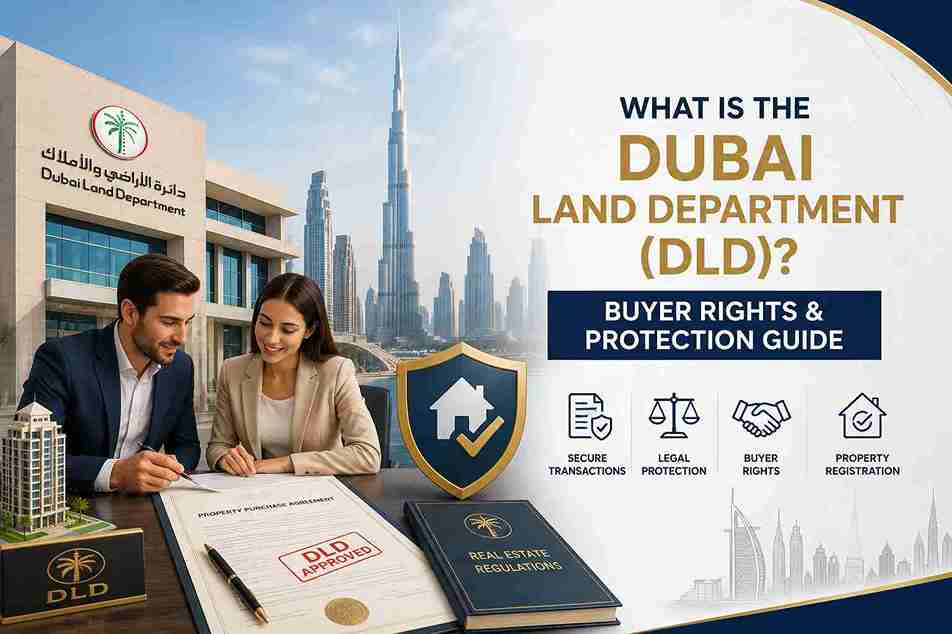
If you have ever browsed real estate in Dubai, you’ve likely come across three acronyms repeatedly: DLD, RERA, and Oqood.
These entities and regulations aren't barriers—they are your strongest financial safety net. Here is everything you need to know about the Dubai Land Department (DLD), how its regulatory arm (RERA) guards your capital, and why buying property in the UAE is safer.
Founded in 1960, the Dubai Land Department (DLD) is the government authority responsible for overseeing all real estate activities in the emirate. Think of the DLD as the legal master key for Dubai property.
Whenever a plot of land is bought, sold, leased, or registered, it flows through the DLD's official registry.
Buyers often mix up the DLD and RERA. The simplest way to think about them is as the parent organization and its enforcement agency.
| Entity | Role | Responsibilities |
|---|---|---|
| DLD (Dubai Land Department) | Government Governing Body | Owns property records, approves ownership rights, issues Title Deeds, and sets overall laws. |
| RERA (Real Estate Regulatory Agency) | Executive Regulatory Arm | Regulates brokers, enforces developer compliance, manages escrow accounts, and monitors construction progress. |
While the DLD holds the keys to legal ownership records, RERA protects your money during the buying process.
The UAE government enforces strict regulatory measures to ensure your funds remain secure.
When you buy off-plan property (a home under construction), you never pay the developer directly into their general company account.
Under Law No. 8 of 2007, developers must set up an independent, project-specific Escrow Account with a licensed UAE trustee bank.
Before a building is even finished, your initial investment is registered in the DLD's central database using an interim registration called Oqood.
This digital record legally binds the property unit to your name. It prevents corrupt practices like double-selling units and guarantees that your right to ownership is fully recognized by the UAE government long before the keys are handed over.
To prevent fake listings and unauthorized real estate agents, RERA requires every licensed broker to possess a unique Broker Registration Number (BRN) and an active Trakheesi Permit for every property advertisement.
Through the official Dubai REST App, buyers can scan an agent's card or verify a listing's permit number instantly to confirm they are dealing with a legitimate professional.
RERA standardizes real estate paperwork across the board to prevent unfair terms.
Beyond sunshine, safety, and zero income tax, international investors choose Dubai because transparency creates confidence.
You don't need to physically live in Dubai to track your investment. Using the Dubai REST App, you can check the exact construction progress of your off-plan property, verify escrow account status, check real-time rental indexes, and view updated Title Deeds directly from your smartphone.
Navigating property regulations in a booming international market requires local expertise and complete legal accuracy. Whether you are buying your dream family villa or securing a high-yield investment unit, Homes Partner Real Estate can help you purchase your property safely.
Our team of certified advisors handles every detail—from validating DLD registrations and escrow status to negotiating contracts—so you can invest with complete peace of mind. Contact Homes Partner Real Estate today to get started!
Learn how the Dubai mortgage process works for expats in 2026. Discover eligibility, LTV ratios, interest rates, required documents, costs, and expert tips for securing a home loan.
If you’re planning to buy property in Dubai, understanding freehold vs leasehold ownership is essential. Learn how they differ in ownership rights, resale value, inheritance, and long-term investment potential.


 What Is the Dubai Land Department (DLD)? Buyer Rights & Protection Guide
 How Does the Dubai Mortgage Process Work for Expats? (Complete Guide)
 What Is Freehold vs Leasehold in Dubai? Key Differences Explained
 How to Buy Property in Dubai as a Foreign Investor Golden Visa Requirements & Step-by-Step Guide